
8 Things We Learned About Sibling Loss While Editing The Loss of a Lifetime (Part 2)
Surviving siblings face identity shift, the fallacy that time heals, and more

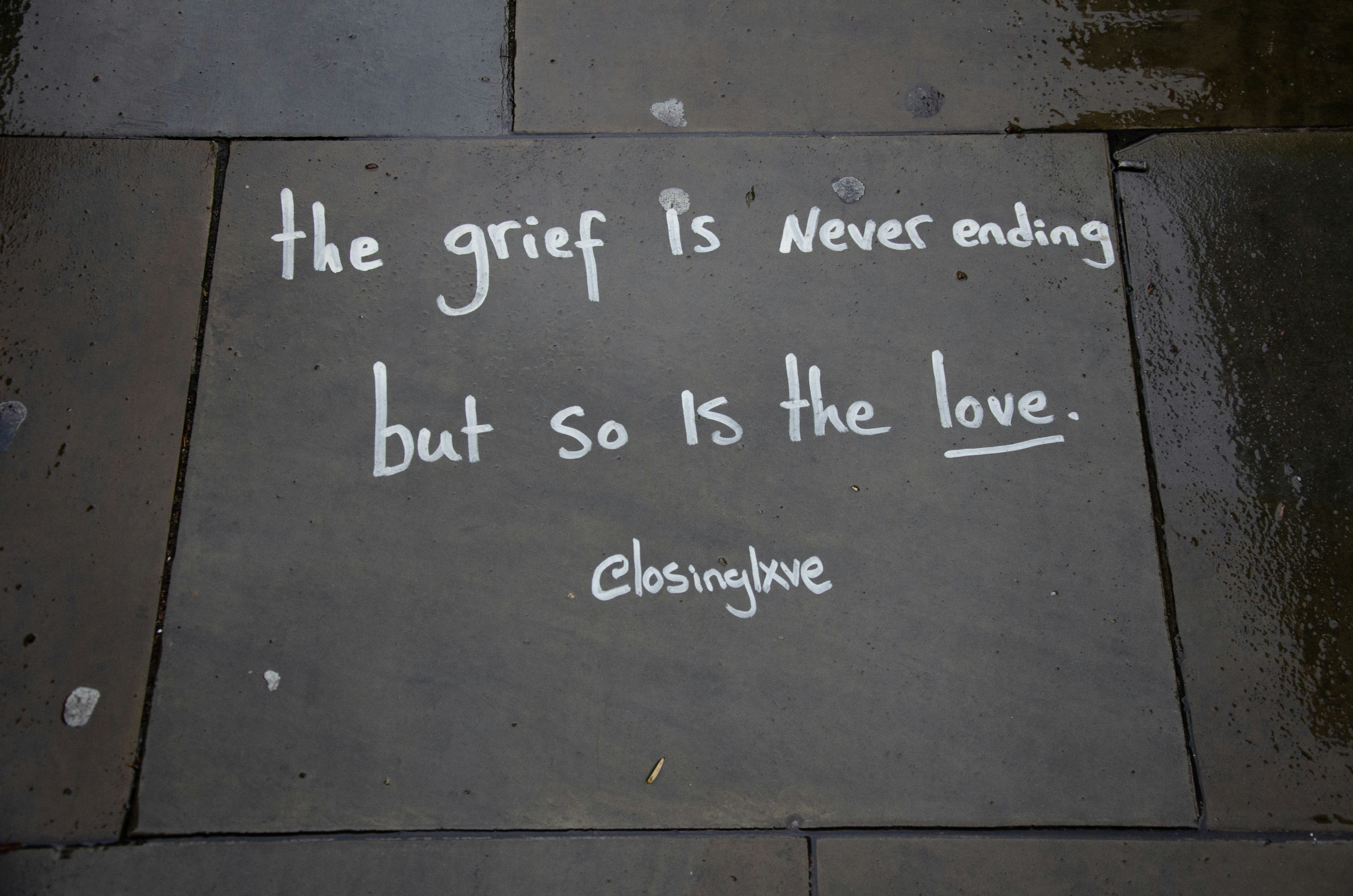
Photo by Utku Kaplan on Unsplash
Hello! This month, we’re continuing to share some of the commonalities we found through editing The Loss of a Lifetime: Grieving Siblings Share Stories of Love, Loss, and Hope. If you missed Part 1, you can catch it here.
5. Our siblings help form our identities, and losing them can shake up our sense of self. In many families, it’s common for parents and grandparents to contrast us with our brothers or sisters. Maybe they were known for their kindness, or for being bold, or for their fierce ambition. When we lose them, we sometimes change and become more like them– if we were the shy one, for example, we might find ourselves stepping out of our comfort zone in order to launch a memorial fund, or we might attempt random acts of kindness on their birthday or death anniversary because it reminds us of them.
“Deafness and Sign Language were a big part of Keagan’s story, his identity. But they were also a big part of the story that my sister and I shared with him, our identity as his siblings.
One of the most memorable books from my childhood is The Comprehensive Signed English Dictionary.
But after he died, and after his memorial service, after we said goodbye to all his Deaf friends, our connection to that world slowly withered away. With no reason to sign, we stopped doing it.”
–Khara-Jade Warren, “Signs of Life”
“I am not my parents’ first child. I am not supposed to exist at all. Their first baby, a girl, was their first child, and she died right before her due date, while she was still inside my mother. She died for no reason anyone can figure out.
My mother had become pregnant with me just 18 months after Malka died out of raw and primal necessity.
On a bulletin board next to the family phone in our kitchen, there was a cardstock with the cover of a book. The cover featured the statue of a person folded over on the floor, their arms wrapped around their chest, their head hanging toward their knees.
That cardstock had been produced by the support group my parents were a part of for people who had lost children before or right after they were born. Malka’s death created a chasm so wide and so big that my parents and others like them had to find a way to feed it forever. Otherwise, it would swallow them whole.
Every time I looked at that image, which was every time I used the phone, it emanated with messages I understood: that I had been created by loss, and because of this, I would always be a shadow, and that life can fold me fully in half, and that if it hadn’t yet, it probably would at some point.”
–Rebekkah Dilts, “The Forest of Crying”
6. Sibling relationships are complicated; sibling grief is, too. Many of us have complicated relationships with our sisters and brothers. Some of us were on rocky terms or estranged from them when we died. We might’ve assumed we’d have time to work our issues out in the future, but when they died, that opportunity dissolved. Or we might’ve been on good terms, but when we reflect back on our sibling relationships, we don’t actually know if we’d be close had they lived. Maybe their addiction would’ve caused decades of pain, or they wouldn’t have shown up to help out when Mom was sick.
“By the time I cross the threshold to empty out his apartment… my brother is a stranger. I haven’t seen him in 16 years. He left town without saying goodbye, never responded to my attempts at contact, and later hung himself in a city hundreds of miles away. He didn’t leave a suicide note, so I have no insight to his final thoughts. Who was the man I am mourning? His home promises answers. I am searching for information, clues, anything to assuage the guilt of no longer knowing my sibling.”
—Kathryn Leehane, “Reclaiming Lost Love”
7. Time doesn’t make it hurt less– grief defies time (because love does), but it does help us acclimate to the loss. Sometimes, weeks or months go by where we don’t experience feelings of grief about our siblings. Other times, we’re surprised by how much it still hurts. Death anniversaries can be unpredictable– some years, they feel almost like any other day, while other times, they can be a painful portal to our rawest grief. All the major life milestones, both happy and sad, can bring our loss to the surface– a wedding, the birth of a baby, the death of a parent– when we live through these momentous events, we’re keenly aware that our sibling isn’t there, and we wish they were.
“The truth is, it impacted me just as much as it impacted my parents. To this day, it impacts all of us. The loss of a child or sibling is life-changing and unnatural. So much has been stolen from my parents and me. Now that I have a family of my own, I could argue it’s been stolen from my daughters, too.”
– Meghan Britton Gross, “The Best Grief Gift Ever”
“With each passing year, the soundtrack of our shared lives degrades a little more. First, the precise combination of fragrances that made up his scent. The sound of his voice and the contours of his face. Now I wonder about things I rarely paid attention to during his short life, like whether hair ringed the knuckles of his toes or how high I had to reach to touch his shoulder.”
– Lisa Cooper Ellison, “As a Long Griever, Pain is a Gift I Welcome”
“As I have gotten older and less busy with work responsibilities, the memories have been flooding back. Similar to older war veterans who have seemingly adjusted well, but who experience war flashbacks when they retire, the losses are more prominent in my psyche.”
–Carol Schultz Vento. “My Lifetime Loss”
8. In order to live our fullest lives, we discover ways to honor our relationships with our dead siblings.
Our siblings are part of us, and death can’t change that. Some of us pushed our grief down for years, only to find it waited patiently for us. Some of us dive into trying to forge meaning from our pain with a ferocity that burns us out. But most surviving siblings find some way to honor our relationships with the sister or brother we lost.
For some surviving siblings, this is a quiet, solitary task, like writing letters to our sibling. For others, it’s an annual ice skating extravaganza that reconnects us to the sisters we love and lost. Whether we honor our siblings in private or public, through books, songs or prayers, with time, we find ways to connect with them, to make space for our relationships, and to share with others who’ve experienced similar losses.
“Often, before a performance, I meltdown on the ice and have a good cry, my heart missing Margie and Jane, wanting them there skating with me. A part of me still doesn’t believe they are gone.
How ironic– the shy, middle sister is performing before a large audience. I can hear Margie and Jane cackling, and commenting, “You have too much blush on, pull your dress down,” knowing deep down they are proud.
As I skate, I lift one leg up high into a spiral and glide across the ice, the wind blowing through my hair. I feel Margie and Jane on my shoulders, whispering in my ears, “Judy, you’ve got this.”
– Judy Lipson, “Celebration of Sisters.”
“I set my blues free. I opened my mouth and let the brokenness fly out. I didn’t have to take singing lessons or drink myself silly. I have no idea if my moans came from sorrow or anger, but I do know they came from being alive– deep down, full-on alive. They rose up from the end of Walter’s life and the beginning of mine.”
— Katie Daley, “Shouting Distance”
My brother, Will, died 27 years ago. I’ve grieved and I’ve avoided grief. I’ve fallen apart and rebuilt myself. I’ve forgotten what Will’s voice sounded like, and I’ve seen echoes of him in my son’s face and my daughter’s luminescence.
I haven’t forgotten the haunting loneliness I felt in the early weeks and months after he died. Perhaps that will continue to live in me for the rest of my life. But I’ve also found incredible warmth and beauty through connecting, even decades later, with other grieving siblings. These relationships with Molly and Alyson, with the authors of our book, with you, if you’re reading this—they help me continue to find meaning in my brother’s goneness. They allow me to feel, still, like a sister.
Thanks for reading. With love from Lynn, Alyson, and Molly.
Wow. This. It’s all here. I just celebrated 70 but it’s all as fresh as when we were 18 and he died. I laugh now to think that I wrote the MC in my first novel who was a girl, hiding in plain sight as a boy. Duh….
Thanks for crafting this powerful list, Lynn. I relate to all of it. You are such a champion for sibling loss survivors. I'm honored to be quoted in this post.